
Qualified Rural Opportunity Zone: Enhanced 30% Benefits Explained
Qualified rural opportunity funds earn a 30% basis step-up and a 50% improvement threshold. See the qualification tests, worked numbers, and open questions.

Qualified Rural Opportunity Zone Funds: The 30% Upgrade Hiding Inside OZ 2.0
Opportunity Zone investors just gained a rural fast lane. The 2025 tax act created qualified rural opportunity funds with benefits no standard fund can match. The basis step-up triples, and the improvement threshold gets cut in half.
Most coverage of the new law buried this section beneath the bigger headlines. That silence is a mistake for anyone investing outside major metros. Rural capital now earns the richest federal deferral package available to individuals.
This guide explains the qualification tests, the enhanced numbers, and the practical deal structures. It also flags the open questions that await further Treasury guidance. Investors who understand the details early will price the best rural deals first.
The provisions live in Section 70421, part of the 2025 tax act that Congress passed in July. Our OBBBA investor summary covers the surrounding changes. Here the focus stays entirely rural.
A quick orientation helps before the details begin. The rural fund is not a separate program with separate elections. It is an enhanced tier inside the same Opportunity Zone structure you already know.
What Makes a Fund Officially Qualified Rural
The statute defines a qualified rural opportunity fund by asset composition. At least 90% of the fund's assets must sit in qualified opportunity zone property. That mirrors the standard QOF asset test exactly.
The rural layer then adds a geographic condition on top. The property's substantially all use must occur in a zone comprised entirely of a rural area. Partially rural zones do not qualify for the enhanced treatment.
The statute defines a rural area by exclusion rather than inclusion. Anything outside a city or town with more than 50,000 residents qualifies. Urbanized areas contiguous and adjacent to such cities are excluded too.
That definition is broader than many investors expect. Small cities of 40,000 people, county seats, and farm towns all qualify. The test measures the city or town itself, not the surrounding metropolitan wave.
Fund managers must document the rural character at the property level. Demographic records, census designations, and use records all belong in the diligence file. Investors should demand that documentation before wiring capital.
Congress targeted rural counties for a simple economic reason. The first decade of zone investing concentrated capital in urban multifamily deals. Rural communities saw minimal fund activity despite genuine need for modern facilities.
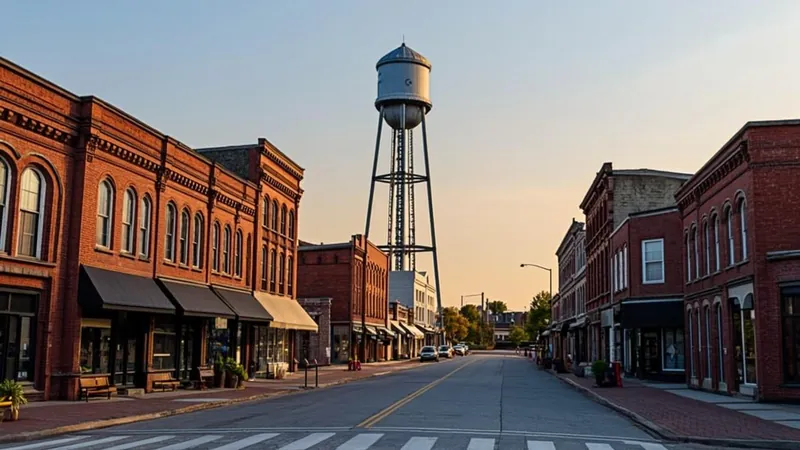
The tripled step-up is Congress answering that imbalance with price. Lawmakers effectively pay rural investors three times the basis incentive. Capital seeks return, and the statute now tips the rural scale noticeably.
The 30% Basis Step-Up Explained With Numbers
The headline benefit arrives at the five-year mark of the hold. Standard QOF investments earn a 10% basis increase in the deferred gain. Qualified rural funds earn a 30% increase instead, tripling the effect.
A side-by-side example shows the dollars clearly. Suppose two investors each defer a $200,000 gain into different funds in 2027. Both hold through the five-year anniversary without an early sale.
The standard investor recognizes $180,000 after the 10% step-up. The rural investor recognizes only $140,000 after the 30% step-up. At a 15% federal long-term rate, the rural advantage saves $6,000.
The gap widens with bigger gains and higher rates. A $1 million deferred gain at the 20% federal rate saves $30,000 in the rural fund. State savings can add more where states conform to the enhanced basis rules.
The step-up also interacts cleanly with the net investment income tax. Recognizing $60,000 less gain shrinks the 3.8% surcharge base for affected earners. Some investors save an extra $2,280 on the example above from that interaction alone.
The step-up also interacts cleanly with the net investment income tax. Recognizing $60,000 less gain reduces the 3.8% surcharge base for affected earners. Some investors save an extra $2,280 on the example above from that interaction alone.
| Item | Standard QOF | Qualified rural fund |
|---|---|---|
| Five-year basis step-up | 10% of deferred gain | 30% of deferred gain |
| Recognized at year five ($200K gain) | $180,000 | $140,000 |
| Substantial improvement threshold | Expenditures exceed full basis | Expenditures exceed 50% of basis |
| Ten-year appreciation exclusion | Available | Available |
The 50% Substantial Improvement Threshold Is Already Live
One rural benefit started before the rest of the program. The substantial improvement test for existing structures changed at enactment in July 2025. Property in rural zones now qualifies when improvement expenditures exceed 50% of adjusted basis.
The standard test still requires doubling the basis of the building. Rural property needs only half that capital commitment to qualify. Projects that never penciled under the old arithmetic suddenly work.
Consider a warehouse bought for $500,000, with its building basis sitting in a rural zone. The standard test demands $500,000 of qualifying improvements within the window. The rural threshold demands only $250,000, freeing capital for other uses.
That relief applies to property in any rural-designated opportunity zone. It does not wait for the January 2027 map to arrive. Developers rehabbing existing rural structures can use it right now, subject to the usual property rules.
The improvement measurement still runs inside a thirty-month window. Qualifying expenditures must begin during that period after the property enters the fund. Planning the construction draw schedule around the window avoids painful disqualification arguments.
Our guide to QOZ deferral mechanics reviews how the improvement test interacts with the 90% asset test. The two tests move together in every fund's compliance calendar.
How the Rural Benefits Stack With the Rolling Deferral
The enhanced step-up rides on the new rolling deferral clock. Gains invested after December 31, 2026 defer until the fifth anniversary. The rural step-up then lands at that same five-year point.
Picture the complete rural timeline for a 2027 investment. The investor rolls a $300,000 gain into a rural fund within 180 days. The deferral runs five years, and no tax arrives during the hold.
At year five, the 30% step-up removes $90,000 from recognition. The investor reports $210,000 of gain that year at long-term rates. Holding through year ten then erases all tax on the fund's appreciation.
The ten-year exclusion applies to rural funds exactly as elsewhere. Rural appreciation that compounds for a decade becomes permanently tax-free. The combination of deferral, step-up, and exclusion is the full triple stack.
Older deferred gains follow the original schedule regardless of rural character. A 2019 deferral recognizes with the 2026 return whether the fund was rural or not. The December 31 deadline breakdown explains that separate event.
Timing the reinvestment deserves deliberate attention in 2026. A gain realized in November carries a 180-day window into spring 2027. Investors closing late-year sales can sometimes position the investment date to land inside the new program.
Which Projects Fit the Rural Profile Naturally
Certain asset classes align with the rural definition almost automatically. Investors will see these structures dominate the first rural fund offerings. Each carries its own operating risk profile alongside the tax benefits.
- Agricultural processing facilities that convert local crops into packaged products.
- Workforce and senior housing in towns without enough rental supply.
- Rural healthcare clinics, dental offices, and small specialty hospitals.
- Hospitality projects serving state parks, lakes, and outdoor tourism corridors.
- Warehousing and light manufacturing serving regional distribution routes.
- Broadband and telecom infrastructure attached to qualifying commercial property.
The common thread is genuine economic use inside a rural tract. Passive land banking does not satisfy the qualified property tests. Substantial improvement or original use must apply to the real property involved.
Operating businesses inside rural funds follow their own set of gates. At least half of gross income must come from active zone activity. Tangible property must also see substantial use inside the zone itself.
A few industries remain off-limits regardless of geography. Golf courses, gambling facilities, and liquor stores carry statutory exclusions. Sundry massage establishments and tanning facilities round out the excluded list.

Our investment property tax guide explains the depreciation side of these structures in depth. Rural improvements also interact with bonus depreciation under the 2025 act. Combining both accelerations can transform a marginal project's after-tax returns.
Verifying Rural Status Before You Commit Capital
Every rural claim ultimately rests on verifiable geography. The city or town's population count comes from the most recent census data. Adjacent urbanized area boundaries come from the census bureau's maps.
Prudent investors run three checks before wiring any money. Each check confirms a different layer of the qualification.
First, confirm the tract sits in a certified opportunity zone. Second, confirm the tract qualifies as entirely rural under the statutory definition. Third, confirm the fund's documents require the rural use test to hold.
The third check matters more than most investors realize. A fund can drift out of compliance through acquisitions or property changes. The operating agreement should spell out what happens if the rural test fails mid-hold.

Local partners shorten the verification path considerably. County economic development offices know their own tract data intimately. Regional banks and community development groups also track eligible sites closely.
The IRS Opportunity Zone FAQ tracks certification and compliance questions. New designations take effect on January 1, 2027, and the certified list controls everything. Our OZ 2.0 designation guide walks the mapping cycle.
How Rural Deals Differ Beyond the Tax Numbers
Tax benefits get investors interested, but rural fundamentals decide outcomes. Smaller markets trade depth for breadth in every underwriting model. Rent rolls are thinner, exit buyers are fewer, and vacancy swings hit harder.
Competition for quality rural assets remains modest on the other hand. Cap rates typically run higher than gateway-city equivalents for similar cash flows. New construction frequently faces little modern supply in its submarket.
The strongest rural deals share three underwriting traits. They anchor employment for the surrounding county, fill a documented service gap, and carry conservative leverage. Tax benefits amplify good fundamentals but never replace them.

Investors should also weigh the impact angle honestly. Rural hospitals, housing, and food infrastructure change lives in visible ways. The program rewards investors for putting capital exactly where communities need it most.
Funding the Capital the Deferral Does Not Cover
Deferring a gain supplies the tax-side capital, not the project equity. A $300,000 deferred gain still requires $300,000 of actual cash invested. Investors need a funding plan for that full amount.
Some investors liquidate other positions to raise the equity. Those sales create their own gains and losses worth netting first. Others borrow against existing portfolios using securities-backed credit lines.
Financing at the fund level reduces the equity check substantially. Rural projects with strong operator sponsors often leverage sixty to seventy percent. Debt service on thin rural cash flows remains the key underwriting constraint.
Model the full picture before committing either way. Our capital gains calculator sizes the deferral benefit while your lender sizes the debt. The two numbers together determine whether a specific deal truly works.
Open Questions That Still Need Treasury Guidance
Congress wrote the rural rules quickly, and some edges remain soft. Regulators have signaled that additional guidance is forthcoming on several fronts. Sophisticated sponsors are already positioning for the likely interpretations.
- How substantially all use gets measured for mixed-use rural properties.
- Whether the 30% step-up survives a fund-level restructuring mid-hold.
- How the rural definition treats annexations that push a city past 50,000.
- What documentation Treasury expects for the 90% rural asset measurement.
None of these questions should stop disciplined investing. They should shape documentation, operating agreements, and exit flexibility instead. Ask every sponsor exactly how they handle each open point in writing.
Our deferral mechanics guide will track guidance as it lands. Rural capital finally carries the program's richest incentives. Investors who master the qualification tests now will own the best rural deals of the decade.

Wasim Akram
Wasim researches and writes every article on TaxGainsCalc, covering capital gains tax for everyday investors. Every figure is checked against primary IRS sources before it goes live.