
Robo-Advisor Tax Loss Harvesting: How It Works
How robo-advisors automate tax loss harvesting: daily monitoring, paired replacement funds, wash sale guards, and what you should verify yourself.

What Robo Tax Loss Harvesting Delivers: The Answer Up Front
Betterment and Wealthfront both run loss harvesting checks daily, with no separate fee beyond the 0.25 percent charge. The automation sells falling ETFs, books the loss, and immediately snaps up a comparable but non-identical stand-in fund.
Your market exposure barely moves while a deductible loss lands on the tax return.
The honest caveat involves scale, because automated harvesting produces real but genuinely modest savings. The benefit concentrates in volatile years, and platform studies suggest it usually runs in fractional percentage points.
A steadily rising market can produce almost nothing for the entire year.
How the Automation Works Day to Day
Each trading day the platform compares every ETF position against its full purchase history. A position trading below its lot basis becomes an immediate harvesting candidate for that specific day.
The system sells it and redirects proceeds into a tracking fund from a different family with similar exposure.
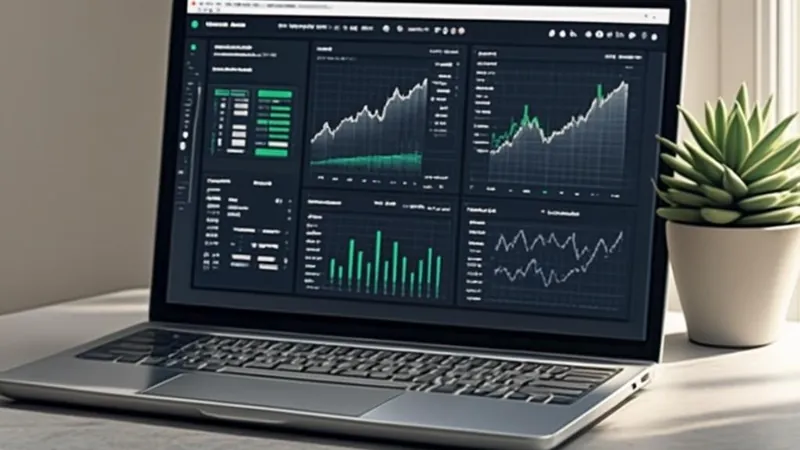 After 30 days pass, the platform swaps you quietly back into the original fund. The pause respects the wash sale window while keeping your portfolio aligned to its long-term target allocation.
Both robo-advisors handle all the recordkeeping, and harvested losses flow onto a tax document you hand to your preparer.
| Step | What the Robo Does | What You Notice |
|---|---|---|
| Daily scan | Flags lots trading below basis | Nothing visible at all |
| Loss sale | Sells the loser, buys paired ETF | Fund name changes briefly |
| 30-day hold | Keeps you in the paired fund | Same market exposure continues |
| Swap back | Restores the original ETF | Loss now on the record |
| Year-end | Reports realized losses | Lower tax bill potential |
What the Harvested Losses Are Actually Worth
Losses work through the standard netting rules that govern every investor's return. Short-term losses cancel short-term gains first, which carry the highest ordinary rates.
Long-term losses cancel long-term gains next in line. Whatever loss remains then offsets ordinary income, capped at the yearly limit.
One short-term loss of $10,000 saves roughly $3,700 for a filer in the 37 percent bracket. The same loss against long-term gains at 15 percent saves only $1,500.
Context decides value, and the complete mechanics live in the tax loss harvesting guide on this site.
Estimating your own potential benefit is straightforward with the right numbers in hand. The tax loss harvesting calculator walkthrough shows the inputs.
Enter your bracket, your expected losses, and your gain pool, and the savings estimate follows directly from there.
Account Coordination Is the Real Innovation
Wash sales poison harvested losses whenever you repurchase substantially identical securities inside 30 days. The rule reaches across every account you own, including retirement accounts.
This is exactly where the automated robo features genuinely earn their annual fee.
Betterment's Tax Coordinated Portfolio places paired ETFs into different account types by design. A taxable harvest never collides with an IRA purchase inside its own walls.
Wealthfront runs comparable logic across its accounts, keeping the house clean through every dip.
The blind spot is everything the robo cannot see or control. Manual trades in your brokerage account can still poison a harvest, along with reinvestments or purchases at another firm. The tools coordinate their own accounts only, so keep outside activity in mind around harvest season.
The Limits Nobody Advertises in the Marketing
Rising markets gradually starve the machine of harvesting opportunities. A portfolio that never trades below basis produces zero harvested losses, and strong years can make the feature worthless. Volatile or declining markets are exactly where the automation shines for clients.
Losses reduce tax on gains, not your whole tax bill. An investor with no gains and little ordinary income has little use for harvested losses. The $3,000 annual deduction and the carryover still do useful work; the loss carryover guide explains unused losses.
Asset class coverage has gaps too, and the robo platforms harvest their curated ETF lineups only. Bitcoin, individual stocks outside the program, and direct real estate all sit outside the machinery. Losses on those assets require manual action, and the wash sale rules then become your responsibility alone.
Direct Indexing: The Upgrade Path for Large Portfolios
Larger balances unlock stock-level portfolios at both firms. Instead of one S&P 500 ETF, the platform holds dozens or hundreds of individual stocks tracking the index. Each holding becomes an independent harvesting opportunity with its own basis history.
Two hundred individual stocks produce far more losers in any given year than two ETFs ever do. Harvesting frequency multiplies, and the losses arrive in smaller but more regular batches. Betterment and Wealthfront both reserve this tier for higher balances, sometimes charging a modest premium for it.
The tradeoff is complexity that some investors will not enjoy. A portfolio of individual names adds trading, tracking, and transfer overhead. For most investors under the direct indexing thresholds, ETF-level harvesting captures the bulk of the available benefit anyway.
Worked Example: A $250,000 Taxable Portfolio
Take a client with $250,000 in a taxable robo account during a bumpy market year. The daily scanner finds $12,000 of harvestable short-term losses across three ETF pairs by November. The platform books the losses and keeps the money invested in paired funds throughout.
The client also realizes $8,000 of short-term gains from selling an employee stock position. The harvested losses absorb every dollar of that gain, erasing a potential $2,960 tax bill. The remaining $4,000 of loss deducts against ordinary income and carries forward if unused.
 The advisory fee on the account runs $625 for the year. The harvesting benefit in this single year exceeds the fee several times over. The next table shows how the math changes across different market years.
| Market Year | Harvested Losses | Tax Value at 37% | Fee at 0.25% |
|---|---|---|---|
| Strong bull market | Near zero | Near zero | $625 |
| Choppy sideways year | $4,000 | $1,480 | $625 |
| Volatile drawdown year | $12,000 | $4,440 | $625 |
Mistakes Investors Make With Robo Harvesting
The first common mistake is double-counting the benefit inside your own head. Harvested losses offset gains you would owe tax on anyway, so the true value is the rate difference. A harvest against gains you never planned to realize is worth much less than it looks.
The second mistake is fighting the platform during drawdowns. Clients sometimes panic when paired ETFs replace familiar names, but the swap is the mechanism doing its job. Interfering with it defeats the entire design, so trust the process or change providers.
The third mistake is mixing in manual trades during harvest season. A dividend reinvestment elsewhere can void a fresh loss, so turn off outside reinvestments in December. The platform cannot warn you about accounts it never sees.
Questions to Ask Before Choosing a Platform
Start with the harvesting methodology, because not all daily checks are equal. Ask how the platform selects replacement funds and how similar they truly are. Substantially identical trades void losses, so the best platforms document their paired-fund logic openly.
Ask about wash sale tracking across account types, and weigh honesty about limits alongside coordination.  Then compare the all-in cost, including the advisory fee and the underlying ETF expenses. A 0.25 percent fee on cheap ETFs stays competitive at most portfolio sizes.
| Question | Why It Matters |
|---|---|
| How are replacement funds chosen? | Similarity avoids wash sales and drift |
| Is TLH free with the base fee? | Both majors include it at 0.25% |
| Does coordination cover IRAs? | Prevents self-inflicted wash sales |
| When is direct indexing unlocked? | Stock-level harvesting needs size |
| What are the ETF expense ratios? | Fees compound alongside the advisory charge |
Is the Feature Worth the 0.25 Percent Fee
Run the arithmetic honestly for your own situation before deciding. A $200,000 taxable portfolio pays $500 annually for robo management.
If daily harvesting adds half a point of after-tax return in a volatile year, it covers the fee twice. That spread is double the annual advisory cost.
Flat markets change the equation, since the harvesting benefit shrinks while the fee persists. Investors with large outside gains each year extract the most value, because fresh losses have something to offset immediately. Our holding period rate comparison explains why the character of gains changes the payoff so much.
The DIY Version Works Too
Nothing stops a disciplined investor from running the same play manually at a low-cost brokerage. Sell a losing ETF, buy a paired fund, calendar the 30-day mark, and swap back. The mechanical steps take minutes, and our walkthrough of settlement and timing rules covers the execution details.
The robo's advantage is persistence rather than cleverness. The machine never forgets a December check and never misses a dip while you travel. Automated tax loss harvesting is really a consistency product, and consistency is exactly what the tax code rewards.
Official rules on loss netting and the wash sale window sit in IRS Publication 550. Read the section once before letting either platform work for you. Then let the automation handle the daily grind of watching prices for you.
When Manual Harvesting Beats the Robo
Certain investors should skip the platform entirely and harvest by hand. Holders of concentrated stock positions need custom lot pairing that ETF models cannot provide. Investors with crypto and securities losses face netting choices, and business owners sit far outside the automation's design.
Manual harvesting also wins on cost for plain-vanilla portfolios. A brokerage charging zero commissions offers the same mechanics without the advisory layer. The price of going manual is diligence, because one missed repurchase makes the loss disappear entirely.
A hybrid approach works for many households today. Run the automated program inside the robo account, and harvest manually everywhere else. Keep the two worlds separated in your records, and the accounting burden stays manageable with a spreadsheet.
Getting Started With Either Platform
Opening an account takes an afternoon at either firm. You answer a short risk questionnaire, fund the account, and pick a portfolio aligned to your goals. Tax loss harvesting switches on by default in taxable accounts, with nothing extra to configure.
 Transfer decisions deserve a moment of thought before you move existing positions. In-kind transfers preserve your basis history and avoid forced sales, while selling first realizes gains. Coordinate the transfer with the receiving platform before you touch anything.
Set expectations for the first year of operation. Harvesting activity follows the market, so a calm year looks quiet. The value shows up over full cycles, and the January loss report files with your return.
The Rules That Decide the Outcome
Three truths govern the robo harvesting decision for every investor. The feature works daily, coordinates within its own walls only, and pays off mainly in volatile years. Value depends on your bracket, your outside gains, and your patience during flat markets.
Match the tool to the portfolio you actually own today. Large taxable accounts with active gain realization benefit most from the automation. Small accounts and retirement-only savers can replicate the core play manually, so choose deliberately before the fee recurs.

Wasim Akram
Wasim researches and writes every article on TaxGainsCalc, covering capital gains tax for everyday investors. Every figure is checked against primary IRS sources before it goes live.